

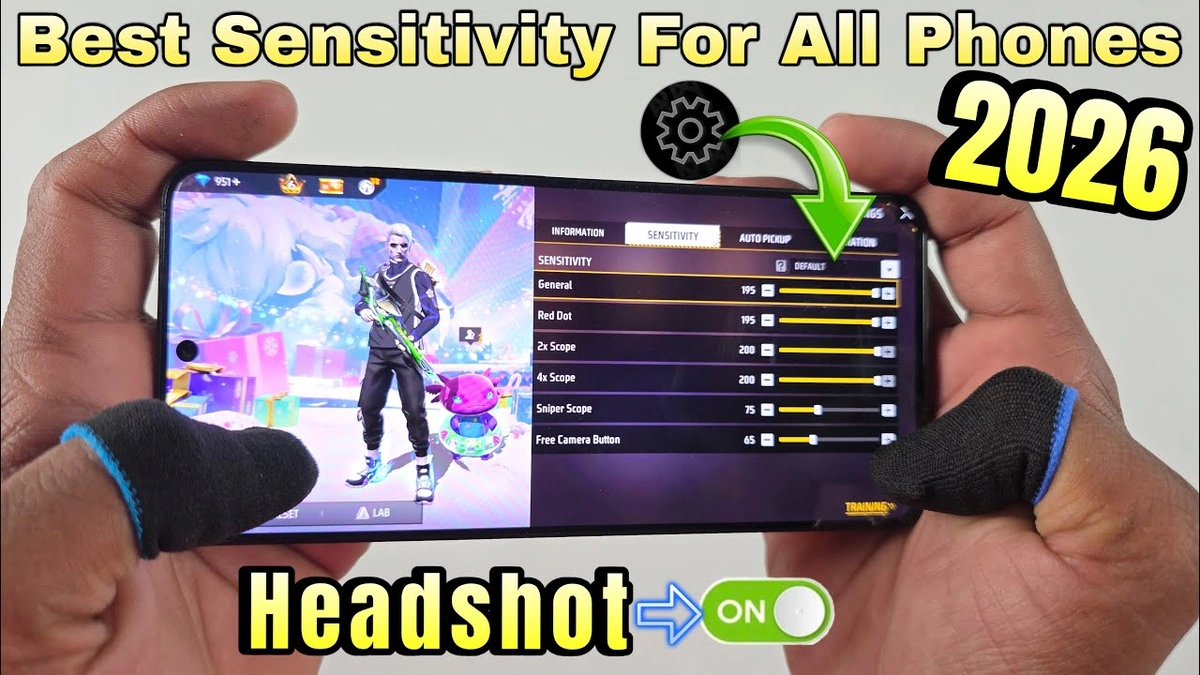
Alright, Free Fire legends (and aspiring legends!), let’s talk about that magical, elusive shot: the headshot. You know the one. That satisfying ding that signals instant elimination, leaving your opponent wondering what just hit them. It’s the hallmark of a true pro, the difference between a clutch play and an early trip back to the lobby. And let’s be honest, we all want more of them, especially as we look towards Free Fire 2026 and whatever new meta it brings.

But here’s the thing: achieving consistent perfect headshots isn’t just about lightning reflexes or raw talent. It’s about precision, control, and, most crucially, your Free Fire sensitivity settings . Think of it like tuning a high-performance race car; every millimeter of adjustment can make or break your run. And as someone who’s spent countless hours diving into training grounds, tweaking every slider, and analyzing pro player setups, I’m here to tell you that finding your sweet spot is an absolute game-changer. This isn’t just a generic guide; it’s a deep dive into how to set up your game for maximum headshot accuracy , tailored for the competitive landscape of 2026.
The Science Behind the Shot | Why Sensitivity Matters (and What 2026 Brings)

Before we dive into numbers, let’s break down why sensitivity is such a big deal. In Free Fire, your sensitivity dictates how quickly your crosshair moves across the screen in response to your finger swipes. Too high, and you’re over-aiming, swiping past your target. Too low, and you’re sluggish, unable to track fast-moving enemies or snap to a head. It’s a delicate balance, and it’s intrinsically linked to your device’s DPI settings (Dots Per Inch) and your personal aiming style.
As we barrel towards 2026, we can anticipate a few things. Game engines evolve, new devices boast higher refresh rates and touch sampling, and Garena might even introduce subtle physics tweaks. These changes, however minor, can subtly shift the ‘feel’ of existing sensitivity settings. The core mechanics of aiming won’t fundamentally change, but the optimal numbers might slightly adjust. This is why having a foundational understanding, rather than just copying numbers, is key. Our goal isn’t just to give you a fish, but to teach you to fish for those headshots yourself!
Many players chase the dream of Free Fire auto headshot settings . Let me be clear: there’s no magic button for ‘auto headshot.’ What people often mean by this is achieving such consistent aim assist and sensitivity control that their shots naturally gravitate towards the head. It’s about optimizing your setup to make those precise movements as effortless as possible. That’s what we’re aiming for here.
Decoding Your Device | General Sensitivity Settings for Every Player
Okay, enough theory. Let’s get practical. Here’s a comprehensive breakdown of the in-game sensitivity sliders and my recommendations for finding your starting point. Remember, these are jumping-off points, not rigid rules. Your personal comfort is king!
- General (Red Dot/Overall Sensitivity): This is your bread and butter, controlling your camera movement and initial aim without scopes. For most players, especially on larger phone screens, I recommend starting high, around 90-100. Why? Free Fire is fast-paced. You need to turn quickly, check flanks, and react to threats from all directions. A higher general sensitivity allows for faster 360-degree turns and quicker target acquisition. Then, you can slowly dial it down in increments of 5 until you feel your aim isn’t overshooting.
- Red Dot Sight: This controls the sensitivity when using unmagnified sights like the Red Dot. Since these are for close-to-mid-range engagements, you want precision without sacrificing speed. A good starting range is 85-95. If your Red Dot shots are consistently missing because you’re swiping too far, reduce it. If you feel stuck, increase it.
- 2x Scope: Now we’re getting into slightly more magnified combat. Here, a bit more stability is usually preferred. Try a range of 70-80. This allows for controlled tracking while still giving you the ability to quickly adjust to moving targets.
- 4x Scope: For longer-range engagements, precision becomes paramount. You don’t want your crosshair wildly swinging with tiny finger movements. I suggest a setting between 60-70. This provides a balance between fine adjustments and still being able to track.
- Sniper Scope: This is for ultimate precision. You’re often taking single, deliberate shots. A lower sensitivity, around 40-55, is generally advisable. This minimizes jitter and allows for very fine, controlled adjustments for that pixel-perfect headshot.
- Free Look: This affects how quickly you can look around while running or parachuting without affecting your aiming. It’s more for situational awareness than combat. Set this to your personal preference, typically 70-85. It won’t impact your aiming precision, so find what feels natural for scanning your surroundings.
This Free Fire sensitivity guide is designed to give you a solid foundation. Don’t be afraid to deviate! Spend time in the training ground. Shoot at moving targets. Practice flick shots and tracking. Your muscle memory will tell you what feels right.
Beyond the Basics | Advanced Tweaks for Pro-Level Accuracy
While sensitivity sliders are crucial, there are other settings that significantly impact your headshot accuracy and overall gameplay. These are the details that often separate good players from great ones.
Unleashing the Power of Your Custom HUD
Your Free Fire custom HUD (Heads-Up Display) is just as important as your sensitivity. A well-designed HUD positions your fire button, scope button, and movement joystick in places that feel natural and minimize finger travel. For headshots, the size and placement of your fire button are critical. Many pro players use a larger fire button (around 50-70% size) and position it slightly above the bottom right corner. This allows for easy ‘drag up’ movements for headshots while ensuring you don’t miss the button during intense firefights.
Experiment with 2-finger, 3-finger, or even 4-finger claw setups. Each has its advantages. A 3-finger claw, for example, often allows for simultaneous movement, aim, and fire, which is a huge advantage for advanced techniques and quick reactions. Don’t just copy a pro’s HUD blindly; adapt it to your hand size and device.
The Gyroscope Advantage
If your device supports it, enabling the Free Fire gyroscope settings can be a game-changer for micro-adjustments and tracking. The gyroscope allows you to subtly move your crosshair by tilting your physical phone. It takes getting used to, but for those tiny, pixel-perfect headshot corrections, it’s invaluable. I recommend starting with your gyroscope sensitivity low, around 50-70 for general, and even lower for scopes (30-50). Slowly increase it as you get comfortable. It’s not for everyone, but for many, it’s the secret sauce to elevate their aim.
Thinking about financial strategies while optimizing your gaming setup? It’s a bit of a stretch, but sometimes getting a new, more responsive device might involve considering options likebest auto loans and EMIs with Hyundai Finance– though I’m not sure how that relates to Free Fire directly, it’s interesting how financial planning pops up everywhere!
Display Settings and Graphics
While not directly sensitivity, your display settings can impact your ability to spot and track enemies, which is foundational for headshots. Play on ‘Standard’ or ‘Ultra’ graphics if your device can handle it without frame drops. Always prioritize ‘High FPS’ (Frames Per Second) over fancy graphics. A smooth, high frame rate means less input lag and more responsive aiming, which is critical for those split-second headshot opportunities. If you’re dropping frames, your sensitivity settings will feel inconsistent.
Practice Makes Perfect | Implementing and Refining Your Settings
You’ve tweaked your settings, you’ve optimized your HUD, maybe even embraced the gyroscope. Now what? Practice, practice, practice! The training ground is your best friend. Don’t just run around aimlessly. Focus on specific drills:
- Headshot Only: Go into the training ground and practice only aiming for headshots on stationary and moving targets. Force yourself to make those upward ‘drag’ shots.
- Flick Shots: Practice quickly snapping your aim from one target to another, emphasizing the head. This trains your muscle memory for rapid target acquisition.
- Tracking: Follow moving targets with your crosshair locked onto their heads. This helps with maintaining aiming precision during engagements.
- Custom Room Drills: If you have friends, create a custom room and practice 1v1 or team deathmatch scenarios with a focus on headshots.
Remember, your perfect sensitivity isn’t static. It might change slightly as you get a new device, as the game updates, or even as your personal aiming style evolves. The key is to understand why you’re changing a setting, not just what to change. Be patient with yourself. It takes time to build muscle memory. And hey, while we’re on the topic of important partnerships, have you ever wondered aboutVin Diesel’s wife? Probably not related to Free Fire, but a curious mind wanders!
For more detailed insights on the technical aspects of mobile gaming, a great resource can be found on sites likeWikipedia’s Mobile Game page, which covers the evolution and mechanics of games like Free Fire. Also, check out community guides on platforms likeGame Revolution for Free Fire tipsto compare different perspectives and refine your strategy. These can provide additional headshot accuracy tips Free Fire players might find useful.
Your Burning Questions About Free Fire Sensitivity Answered
How often should I adjust my sensitivity?
Ideally, once you find a comfortable range, you shouldn’t drastically change it too often. Minor tweaks (1-2 points up or down) are fine if something feels off. Constant changes prevent muscle memory from developing. Stick with a setting for at least a week before making significant adjustments.
Does phone performance affect sensitivity?
Absolutely! A phone with low FPS (frames per second) will make your sensitivity feel inconsistent and ‘laggy.’ Even with the optimal Free Fire settings , a poor-performing device will hinder your aim. Always prioritize ‘High FPS’ in your game graphics settings.
What’s a good starting point for new players?
New players should generally start with higher general sensitivity (90-100) and then slightly lower scope sensitivities (2x: 70-80, 4x: 60-70, Sniper: 40-50). This allows for quick movements and then refines precision as needed. The key is to find what feels responsive yet controllable.
Should I copy pro player settings directly?
While it’s a great starting point for inspiration, directly copying pro player settings isn’t always the best Free Fire settings for you. Pros often use different devices, screen sizes, and playstyles. Use their settings as a reference, but always adjust them to fit your unique setup and comfort.
Is there a ‘best’ DPI for Free Fire?
There’s no single ‘best’ DPI. It depends on your phone’s screen size and your in-game sensitivity. Higher DPI makes your screen more sensitive overall, so you might need lower in-game settings to compensate. Many competitive players use DPIs between 400-600, but some go higher. Experiment carefully, as incorrect DPI can affect your phone’s usability.
The Headshot Journey Continues | Your 2026 Free Fire Mastery
Finding the best Free Fire sensitivity settings for perfect headshots in 2026 isn’t a one-and-done deal; it’s a journey of self-discovery, practice, and continuous refinement. By understanding the ‘why’ behind each setting, committing to consistent practice, and never being afraid to tweak and adjust, you’ll transform your aim. You’re not just copying numbers; you’re building a deeper connection with your game, your device, and ultimately, your own potential.
So, head into that training ground. Experiment with your gyroscope control , fine-tune your custom HUD , and dial in those sensitivity sliders. The path to becoming a headshot king in Free Fire is clearer than ever. Go forth and make those dings count!


